DO MORE OF WHAT YOU LOVE

A Quick Primer on Brushes
A quick primer on brushes and how to know what you're searching for amongst a whole forest of possibilities ...
At The PaintBox art supplies shop you can choose from an extensive range of natural and synthetic fine art brushes & palette knives from the best brush makers around the world. The great variety of artist brushes we sell at The PaintBox for painters who work with oils, acrylics and watercolour has steadily grown over the years because we have had the privilege of being sent samples of brushes from the world’s leading brush manufacturers, and the ones we are most impressed with, we sell! Our brush section is divided into those for use with oil and acrylic paint, and those for watercolour paint. We have also collated collections of multipurpose brushes, affordable brushed and miniature brushes and even signwriters brushes. Below is an explanation of why and what brushes will be best suited to your specific painting approach.
There are a couple of general differences. Firstly – The length of the handle, which compliments the painting approaches most associated with the medium the brush is being used with. Oil and acrylic painting tends to be larger scale than watercolour, and often is more gestural. Oil and acrylic brushes have a longer handle so that one can work with a greater distance from the canvas, making it easier to see the progression of the picture as a whole. Watercolour painting tends to demand more control, and is usually worked with on a smaller scale. Shorter handles are more comfortable for working with this approach in mind. It is also important to consider whether you work primarily standing or sitting. Due to the fluid nature of watercolour most artists sit at a table and it is easy to see that, with the eyes and face in a downward position, the artist could poke themselves in the eye with a long handle. It is for this very practical reason that brush makers traditionally make watercolour brushes with a small neat, convenient handle for seated work.
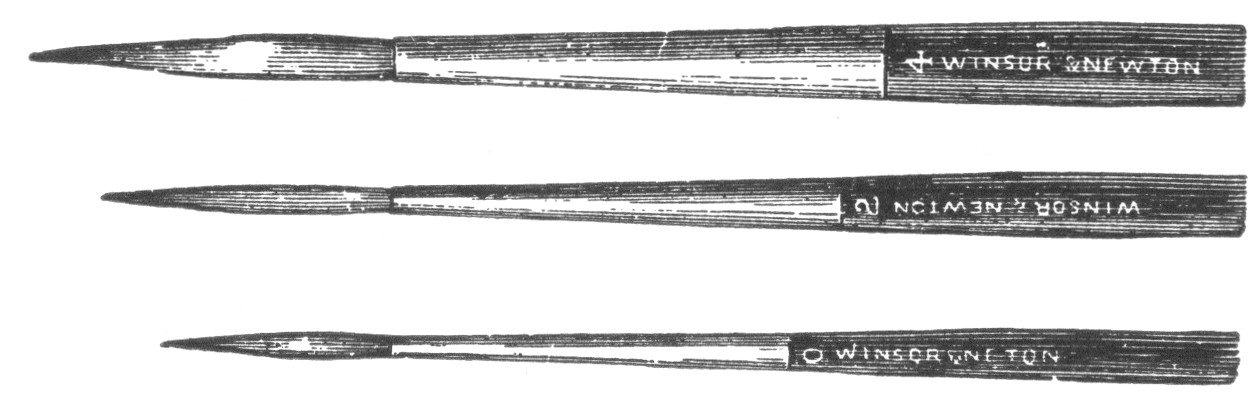
The second difference is the hair or fibre used in the brushes. Conventionally oil and acrylic paint is applied with a thicker consistency than watercolour paint, and the bristle fibre is correspondingly less delicate. This means that brushes used with oil or acrylic tend to require a more thorough cleaning after use if the brush’s lifespan is to be prolonged and the condition of the brush is to be maintained. Oil and acrylic brush hairs are coarser than watercolour brush hairs to withstand the thicker paint. Many artists that use oils or acrylics like to work with impasto paint, and the coarser hair brushes allow brush marks to show. The most commonly used natural hair used in oil and acrylic brushes is hog hair, but there are splendid synthetic versions now available. In watercolour painting the generous liquid holding capacity of a fine haired brush is often sought after so that large washes of colour can be applied to paper in a single stroke. These brushes hold fluid between the fibres of the brush and work by means of capillary action. Sable is the most common hair used for natural watercolour brushes, but squirrel hair is also brilliant for mops and wash brushes thanks to the way that the hairs taper to a fine point. They are exceptionally fine, absorbent and resilient, as well as versatile. In short a classic oil brush is a pushing implement whereas a watercolour brush holds and distributes paint by means of capillary action.
Synthetic fibre brushes are available for all painting, and these tend to replicate the qualities of the best natural hair brushes available. Generally synthetic hair tends to have more spring or ‘snap’ (when one pushes the head of hair to one side and then release, the hairs ‘ping’ back into place more quickly than most natural hair brushes), which is sometimes favoured by artists because the marks one can achieve with a springy brush tend to be more expressive and punchy. Because they are not natural the hair tends to also have a greater lifespan. All brushes, if looked after, can last a very long time with careful cleaning and storing and care.
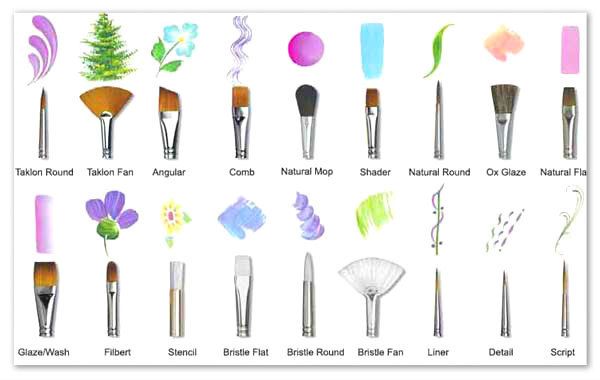
Above are some basic brush shapes that are useful for beginners. We also sell a great variety of brushes that are used by artists that have become popular in the last decade, some of these brushes have entered the realm of the artist from other applications such as signwriting, notably the dagger also known as a sword liner or sword. These brushes can carry unusually large amounts of paint and are useful across all painting mediums.
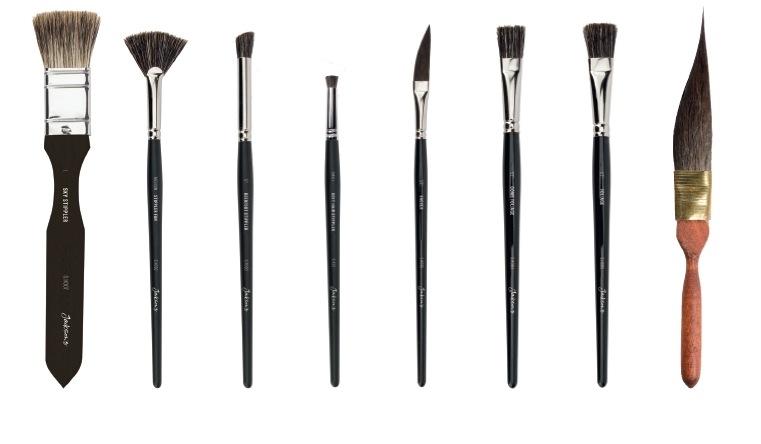
Another interesting family of brushes that you will find in the shop are the handmade japanese brushes which we import, both hake brushes and sumi brushes which are exciting for watercolour and multimedia artists